Don
Bird BoxDon is a resident of the Shillingham house community whose fear of an outside threat gradually becomes entangled with Gary’s beliefs. He first appears as one of the housemates who welcomes Malorie, but later resists admitting another stranger and grows close to Gary, whose explanations give Don a way to interpret the danger. That affiliation ends in catastrophe: during the household’s collapse, a voice from below identifies Don as the person who pulled down the blankets.
Identity and Introduction
When Malorie reaches the house, she sees one woman and four men among its residents. Don introduces himself after Jules, describing the group’s alarm at the unexpected knock: nobody has knocked on the door for weeks. He is a little older than Malorie and wears black pants and a purple button-down shirt with the sleeves rolled to his elbows. His first exchange establishes the house’s defensive isolation, but his response is not simply hostile: after Malorie apologizes, another resident speaks for the group in welcoming terms.
Don’s later conduct makes that first moment more complex. He belongs to a community whose survival depends on deciding whether to open its door, and he experiences each new arrival as both a possible person in need and a possible danger. The house’s protective rules therefore turn hospitality into a recurring test of trust.
Suspicion and the Question of Trust
Don’s skepticism becomes visible when Tom proposes testing the well water. Tom argues that the residents cannot use anything if they cannot use their backyard well and insists on taking the risk himself. Don asks whom Tom sounds like, then answers that he sounds like George, except that George had a theory. The comparison links Don’s caution to the house’s earlier history of uncertain explanations, while also showing that he distinguishes Tom’s immediate proposal from George’s theorizing.
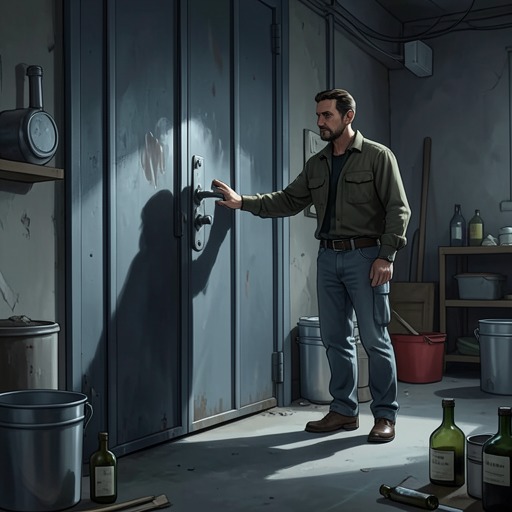
That guardedness shapes Don’s response when the residents discuss admitting people back into the house. He says he is not convinced they should let them return, prompting Felix to challenge the position. Later, when Tom turns toward the door, Don reaches across and grabs his wrist, hissing that he does not want it opened. Tom pulls free and invokes the group’s vote: they will admit the newcomer just as they admitted Olympia and Malorie, and just as George admitted Don and Tom. Don stares at Tom for a long moment. The appeal to the house’s own history makes Don’s resistance more than a simple disagreement about procedure: the rule he now opposes is the same act of welcome on which his own presence depended.
Gary’s Influence and Don’s Divided Affiliations
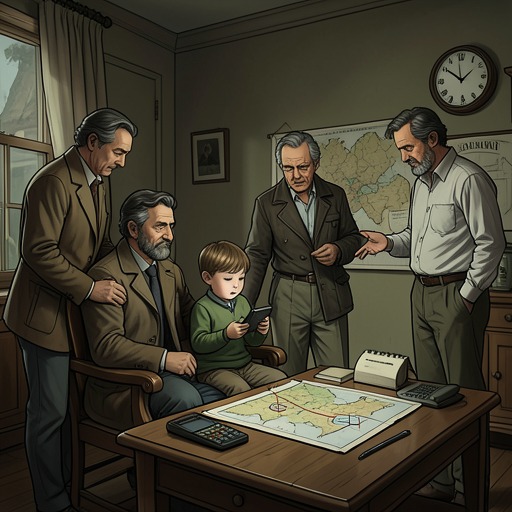
After Gary arrives, Malorie experiences the house as changed and divided, and Don is the resident who worries her most. While Tom and Jules talk in the living room, Don is often in the dining room with Gary. Don has shown particular interest in the story of a man who removed the drapes and unlocked the doors. As Malorie washes clothes at the kitchen sink, she hears Gary explain how Frank thought, repeatedly presenting Frank’s outlook rather than clearly stating his own. Gary compares the danger to a 3-D movie: viewers who understand the effect, he argues, know they were safe all along. Don listens to this account, and Malorie sees him come full circle with Gary—an alignment that makes the household’s division personal as well as ideological.
Yet Malorie does not regard Don as wholly lost to Gary’s influence. Despite Don’s changed affiliation and unpredictable moods, she thinks she might be able to speak to him. She remembers goodness in him and considers whether his skepticism could still help expose something wrong with Gary. In her view, Gary has spent weeks acting like a devil on Don’s shoulder, while Don’s doubts may have persisted beneath their conversations. This possibility remains a hope rather than a confirmed reconciliation, but it preserves a distinction between Don’s susceptibility to Gary and an unquestioning acceptance of everything Gary says.
The Household’s Collapse
During the final crisis, Malorie watches Gary carefully. When she and the others close their eyes, she hears the front door open and close and thinks she hears Gary’s feet on the lawn. When she opens her eyes, Don is no longer with the others in the foyer, and she thinks he has left with Gary. A sound from the kitchen complicates that impression: she calls Don’s name, and his grunt confirms that he is still inside. The brief uncertainty over whether he has gone or stayed echoes the divided loyalties that have defined his place in the house.
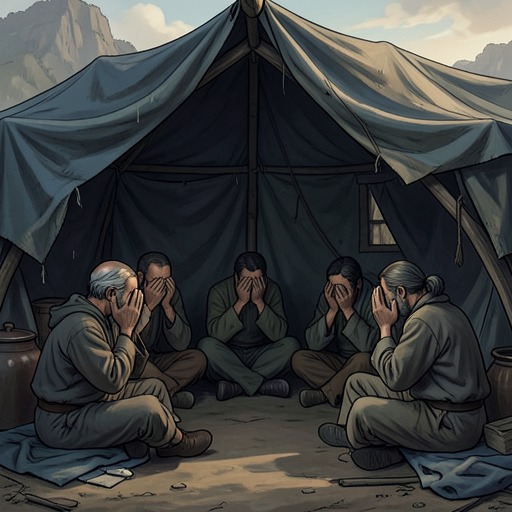
The decisive accusation comes from below. A voice shouts that it is Don, then repeats that Don pulled the blankets down. The claim identifies him as responsible for removing the coverings that shielded the household from the creatures. Gary whispers that they will not hurt the residents, but Malorie is no longer listening to him. Don’s earlier suspicion and his possible doubts about Gary do not prevent this act; the hope that his skepticism might counter Gary’s influence gives way to the reported consequence of the blankets being pulled down.
Character and Narrative Role
Don’s arc turns on the gap between caution and judgment. He understands the danger well enough to resist opening the door, and he can recognize that a newcomer may be suspect; at the same time, his sustained interest in Gary’s account draws him toward an interpretation that undermines the household’s defenses. The contradiction is sharpened by Tom’s reminder that Don himself was once admitted by George: Don’s fear of renewed entry sits beside the community’s history of surviving through welcome and collective decisions.
The narrative withholds certainty about Don’s inner reasoning. Malorie can imagine goodness in him and suspect that he has doubts, but the story does not establish what he believes at the moment the coverings come down. Instead, his actions are conveyed through fragments—a hand gripping Tom’s wrist, conversations overheard from another room, a door heard opening, a grunt from the kitchen, and finally the shouted identification from below. In a world where people cannot safely see what is outside, this chain of sounds makes Don’s changing allegiance legible through what the house hears and what its defenses lose.